

 Facebook
 X
 Pinterest
 Copy Link
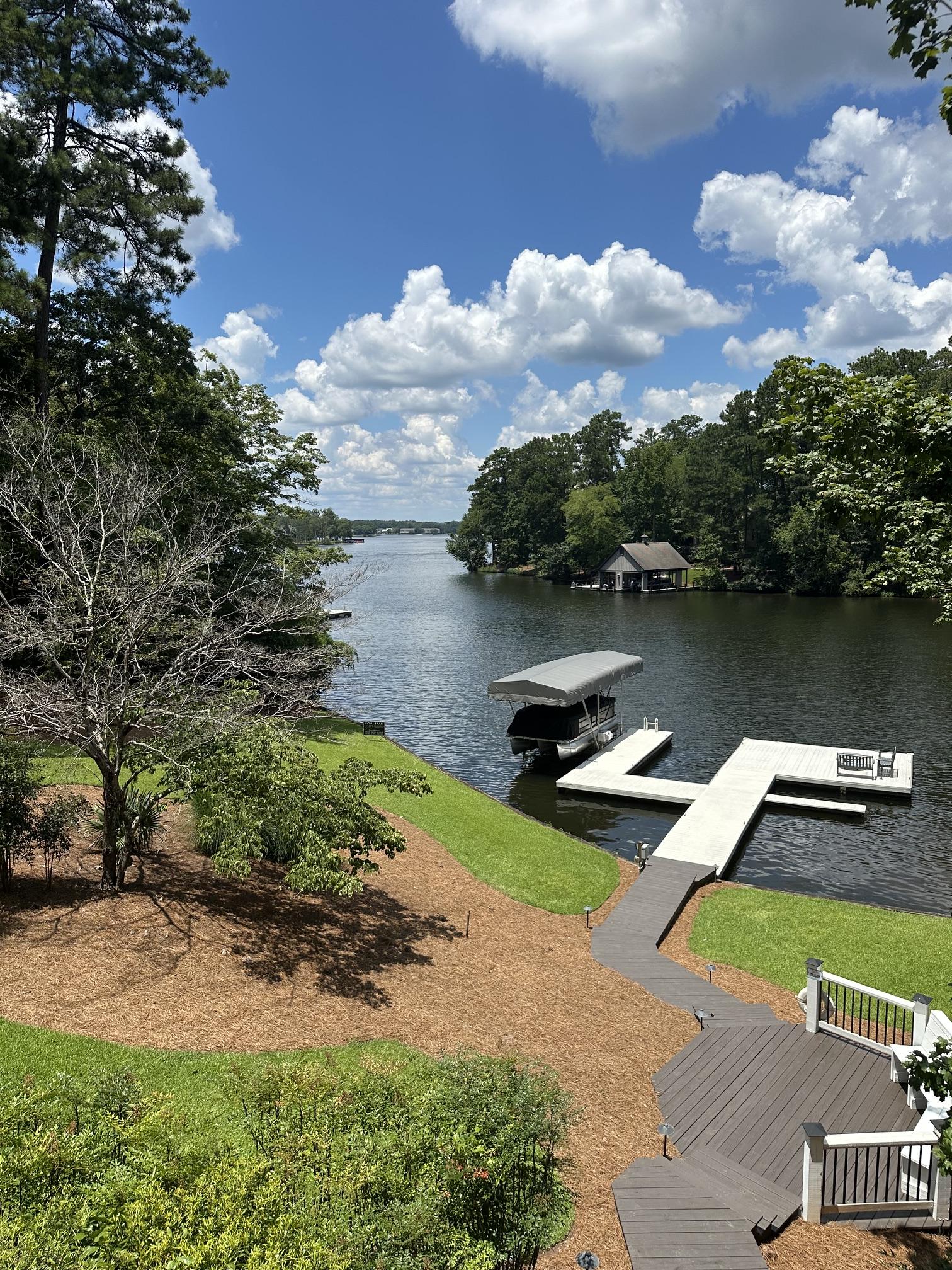
If you have been dreaming about owning a home on Lake Oconee, you are in good company. This extraordinary body of water in the heart of Georgia has been drawing buyers from Atlanta, Augusta, and beyond for decades. The lifestyle here is genuinely unlike anything else in the state. Eight championship golf courses, 19,000 acres of pristine lake, world-class dining, and a community of warm, welcoming people who chose this life on purpose. It is easy to understand why people fall in love with it quickly.
But falling in love quickly is also where some buyers get into trouble.
The Lake Oconee real estate market has nuances that simply do not exist in a typical residential transaction. Miss them and you could close on a lakefront property only to discover the dock you were counting on cannot be modified, the boathouse you planned to add is not permitted, or the short-term rental income you were expecting is prohibited by county ordinance. These are not hypothetical scenarios. They happen to unprepared buyers every year.
I am Courtenay Powell, a REALTOR® with Coldwell Banker Lake Oconee Realty and a full-time Reynolds Lake Oconee resident since June 2024. I moved here because I love this community. I work here because I want buyers and sellers to navigate it with confidence. Part of that means sharing the things that most people do not find out until it is too late.
Here are three of the most important ones.
1. Georgia Power Controls What You Can Build on Your Shoreline, Not Just Your County
Most buyers assume that purchasing a lakefront property means owning the shoreline outright and having the freedom to build, modify, or expand water access structures as they see fit. At Lake Oconee, that assumption can be an expensive one.
Lake Oconee is a Georgia Power reservoir. That single fact shapes nearly everything that can be built, modified, or maintained along its shoreline. The Georgia Power Shoreline Management Program issues authorizations for docks, boat lifts, boathouses, seawalls, and any other stabilization work along the lakebed and immediate shoreline. These authorizations are entirely separate from the building and zoning permits issued by Greene County, Morgan County, or Putnam County. In many cases, federal authorization from the U.S. Army Corps of Engineers is also required for any structure placed in the water.
In practical terms, this means a lakefront buyer must navigate multiple layers of approval before doing anything meaningful on the water. Want to repair an aging dock? You need Georgia Power authorization. Want to add a boat lift? Same process. Want to build a boathouse? That is where things get particularly surprising.
Boathouses on Lake Oconee are not generally available to new property owners. Georgia Power’s shoreline policy restricts boathouse permitting to original property owners and their heirs who still retain ownership. If you purchase a lakefront home with the intention of adding a covered boathouse, that plan will almost certainly not be possible. This is a detail that regularly catches buyers off guard, particularly those who are comparing Lake Oconee properties to lakes in other states where shoreline rules are far more permissive.
The dock size rules are also more specific than most buyers expect. Georgia Power permits a single boatslip configuration off a private residence dock, with specific dimensional limits. Lake Oconee is notable as the only Georgia Power lake that permits free-standing boat lifts, and up to two lifts may be permitted on a single private dock under the right conditions. These details vary by lot, by location on the shoreline, and by the history of existing permits on the property.
The critical takeaway for buyers is this: a lakefront address and a dock visible in listing photos do not guarantee that the dock is fully permitted, transferable, or expandable. Before you make an offer on any Lake Oconee waterfront property, verify the dock permit status, confirm that the license transfers with the sale, and understand exactly what Georgia Power will and will not allow on that specific parcel. This is not a step to handle after closing. It is a step to handle before you fall in love.
2. Short-Term Rental Rules Are a Patchwork, and Assuming You Can Rent Your Property Is a Costly Mistake
Lake Oconee’s popularity as a destination has made it an attractive market for buyers considering short-term rental income. The idea is appealing. A beautiful lakefront or golf community home that generates revenue when you are not using it sounds like the best of both worlds. For some buyers, it genuinely is. For others, it is a plan that unravels quickly once the local regulations become clear.
The core issue is that Lake Oconee spans multiple counties, and the rules governing short-term rentals differ significantly across each one. What is perfectly legal in one neighborhood may be strictly prohibited in the one right next door. And within any given county, homeowners association covenants and community-specific rules often add another layer of restriction that is entirely separate from what the county allows.
In Greene County, where Reynolds Lake Oconee is located, operating a short-term rental of less than 31 days requires the property to be located within a designated Short-Term Rental Overlay District and to hold a current Greene County Short-Term Rental Business License. Properties outside those overlay districts are not eligible, regardless of what the owner intends. This eliminates a significant portion of the county’s lakefront inventory from short-term rental consideration entirely.
Morgan County has historically taken an even stricter approach. County zoning regulation 15.35 prohibits all residential rentals of less than 30 days in all zoning districts except one. This ordinance has been in place for well over a decade and has been actively enforced. Buyers purchasing on the Morgan County side of the lake with short-term rental plans need to verify their specific parcel’s eligibility carefully before closing.
The Reynolds Lake Oconee community itself, like most private gated communities in the area, has additional restrictions on short-term rentals through its homeowners association covenants. These community-level rules are enforceable independently of county ordinances, meaning that even if a county permits short-term rentals in a given area, the community association can and often does prohibit them separately.
For buyers who are purchasing purely as a lifestyle investment with no intention of renting, these rules may be irrelevant. But for any buyer factoring rental income into their financial model, verifying both the county ordinance and the community covenant before making an offer is not optional. It is the difference between a smart investment and a frustrating surprise.
The broader lesson here is one that applies to every corner of the Lake Oconee market. This is not a one-rule-for-everyone lake. Every buyer must do their homework on their specific property, their specific community, and their specific county before assuming anything.
3. A Lakefront Address Does Not Automatically Mean Usable Water Access
This is perhaps the most counterintuitive thing about Lake Oconee real estate, and the one that surprises buyers most consistently. Owning a lakefront property does not automatically mean you have easy, legal, or even practical access to the water.
Dock rights are property-specific. They are tied to permits and licenses that may or may not transfer with the sale of a home. A dock that appears in listing photos as a feature of the property may sit on Georgia Power project lands under a license that does not automatically convey to a new owner. Verifying the transferability of any dock license before closing is essential, because discovering after closing that your water access is not legally yours is a situation that is both costly and entirely avoidable.
Water depth is another variable that catches buyers off guard. Lake Oconee’s shoreline is not uniformly deep, and a dock that is perfectly functional during normal lake levels may sit in water too shallow for practical use during dry periods or seasonal drawdowns. Buyers who intend to keep a boat at their private dock need to verify water depth at that specific location, not just at the nearest marina.
The permitted use of existing dock structures also matters enormously. A dock that has been in place for decades may not comply with current Georgia Power shoreline specifications. Modifying or expanding a non-compliant structure can trigger a full permitting review, and there is no guarantee that the modifications you want will be approved under current rules.
What this means for buyers is straightforward. Do not evaluate a lakefront property based on what you can see in the listing photos. Evaluate it based on what you can verify in writing. Request the Georgia Power shoreline authorization documents. Confirm the dock permit is active and transferable. Verify the water depth at the dock. Understand what you can and cannot build or modify on that specific parcel before you make your offer, not after.
Properties with clean, transferable dock permits, confirmed water depth, and Georgia Power authorization in good standing command a genuine premium in this market, and they deserve to. They represent a level of certainty that protects your investment and your enjoyment of the lake for years to come.
The Bottom Line
Lake Oconee is one of the most extraordinary places to own real estate in Georgia. The lifestyle is real. The values are strong. The community is everything the brochures say it is and more. But this is also a market where the details matter enormously, where the right questions asked before an offer is written can save a buyer from discovering the wrong answers after closing.
These three issues, shoreline permitting and Georgia Power restrictions, short-term rental rules that vary by county and community, and the gap between a lakefront address and guaranteed water access, are the ones I walk every buyer through before we ever tour a property. They are not reasons to avoid this market. They are reasons to approach it with an agent who knows it well.
I have called Reynolds Lake Oconee home full time since June 2024. I did not move here for work. I moved here because I love this community and I believe in the lifestyle it offers. Now I help buyers and sellers navigate it with the confidence that comes from insider knowledge, professional experience, and genuine care for every client I serve.
If you are considering buying or selling at Lake Oconee, let’s start the conversation.
Courtenay Powell | REALTOR® | Coldwell Banker Lake Oconee Realty Call or text: 770-318-2481 cpowell@cblakeoconee.com oconeerealestateadvisors.com
From first showing to final signature, I am here every step of the way.
